
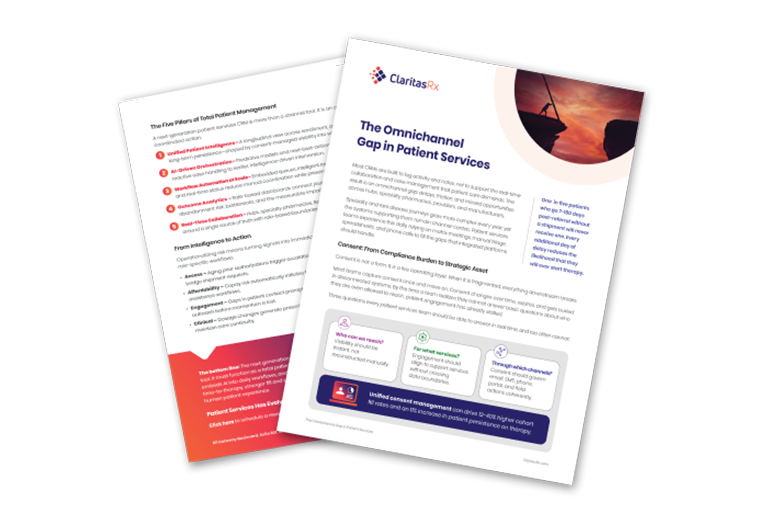
Most CRMs weren’t built for what patient services actually demands. Here’s what a total patient management system looks like—and why it matters.
Specialty and rare disease journeys are growing more complex. Yet the systems supporting them haven’t kept pace — leaving patient services teams patching gaps with spreadsheets, matrix meetings, and manual triage.
The result?
Delays, missed interventions, and patients who never start therapy.
One in five patients who go 7–180 days post-referral without a shipment will never receive one. Every additional day of delay matters.
This guide explores:
- Why fragmented consent is the hidden barrier to omnichannel engagement — and how to fix it
- The five pillars of a next-generation patient services CRM built for coordinated action
- How AI-driven orchestration moves teams from reactive case handling to earlier, smarter intervention
- What unified patient intelligence looks like across enrollment, access, fill, adherence, and persistence
The bottom line:
The next generation of patient services CRM isn’t another channel tool. It’s a total patient management system — one that unifies consent-managed data, embeds AI into daily workflows, and drives proactive, cross-stakeholder action.

